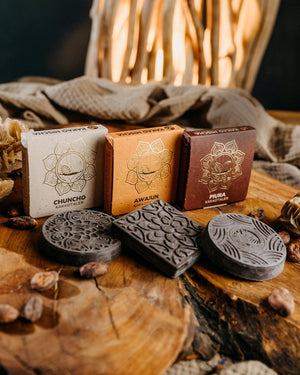


In a world that is becoming faster, louder, and more digital, many people are searching for moments of authenticity and presence. Places where they can reconnect with themselves. For some, this path begins quite consciously, while for others it starts completely unexpectedly with a small piece of cacao.
And that is exactly how the story of Mischa's ceremonial cacao began: not with a grand vision, but with an unassuming piece of cacao, bought at a market in Brazil.
A taste that changed everything ✨
What at first seemed like an ordinary snack turned out to be a turning point. The first bite was surprising: intense, bitter, raw, and at the same time full of depth. But with that sharp note came a sense of clarity, calm, and mindfulness. An inner "wow" moment that would later become the foundation of an entire mission: bringing people back into connection—with themselves, with their bodies, and with nature.
The journey to cacao and back to the source 🌎
On a longer journey through South America, a new chapter opened for Mischa. In Guatemala, a traditional cacao ceremony revealed for the first time that cacao can be much more than just a treat. These rituals are not about the taste; you experience connection. Connection with yourself, with the community, and with the nature that produces this raw material.

Back in Germany, the search for pure, unprocessed cacao began. Not the typical sweet chocolate, but the plant in its most original form, full of nutrients, theobromine, caffeine, and natural vitality.
From the first ritual to a growing community
The adventure finally started with 500 kilograms of raw cacao from Belize. Festivals, workshops, and small ceremonies formed an ever-growing community of people who discovered the joy of mindful consumption.
Today, it’s long been about more than just taste. It’s about a conscious ritual, a counterpart to modern consumerism. Many describe that after a cup of ceremonial cacao, they:
- think more clearly
- feel things more deeply
- are more present in their bodies
- experience a more stable mood
And this is also scientifically explainable: cacao contains many valuable ingredients that affect the nervous system, concentration, and emotional state.
Sustainability begins at the source 🌱
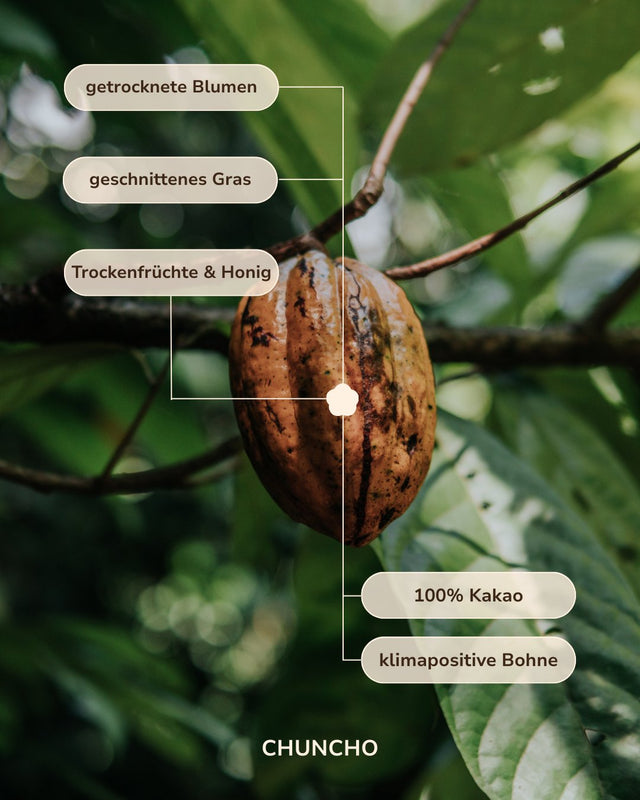
A central aspect of this movement is direct contact with the growing regions. This led to close relationships with indigenous communities, such as in Peru, where ancient cacao forests are tended and traditional knowledge is preserved. The families there are not just producers, but guardians of the cultural heritage of the cacao plant.

This appreciation is also reflected in the transparent supply chain, sustainable packaging, and the ambition to create a product that brings people closer together—not just as a taste experience, but as a reconnection back to nature.
The path away from consumption & toward mindful enjoyment
What began as an experiment is now a movement toward slower living, conscious nutrition, and genuine rituals. Experience shows that people are longing for places where they can not only consume but also feel.
Mindful cacao enjoyment is a gateway for this:A moment of pausing, an unhurried, honest ritual that is open to everyone.
Ceremonial cacao is more than hot chocolate
The big difference compared to typical chocolate lies in the intention:
It is not about just drinking something delicious; it is about taking time. For yourself, for a feeling, for a piece of nature.
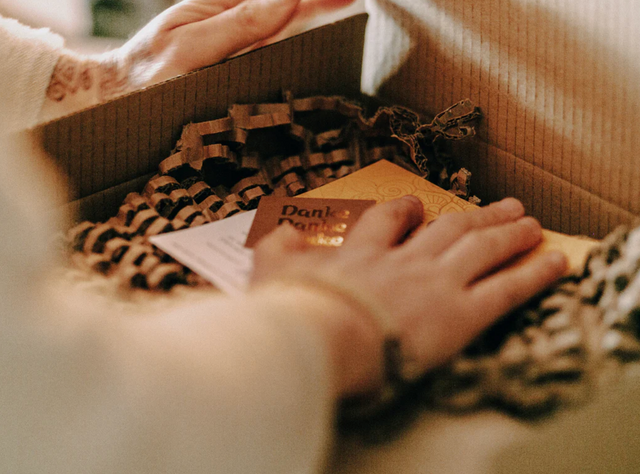
Every package tells this story: from the tree to the processing, to the precious end product. A code on every pack even leads directly to the ceremony, which you can participate in from home.
The secret of why cacao touches so many people today is beautiful and very simple at the same time.
Cacao brings people back to the present.
It strengthens the connection to your own body, helps you slow down, and opens the heart to what really counts: community, connection, consciousness, and enjoyment that goes deeper than any chocolate bar.

In a time when so much is artificial, highly processed, and fast-paced, ceremonial cacao stands for the opposite: nature, authenticity, and a ritual that reminds us how beautiful it is to simply be human.

-
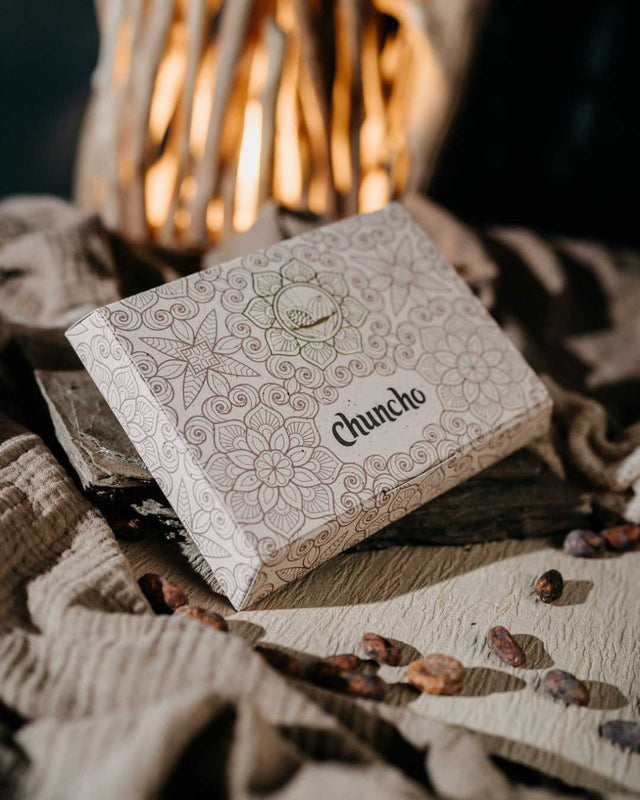
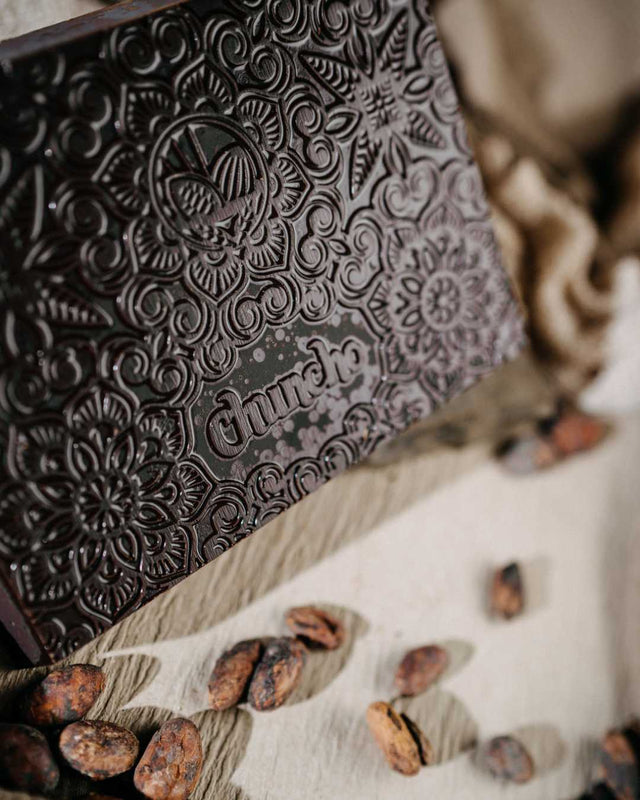 Chuncho
 -

 Chuncho
Kakao Mischa
The Chuncho Gift Bundle: Ceremonial Cacao bars with Instructions and Affirmations
8,50 €(283,33 € / kg)Unavailable -
 Piura Blanco
 -
 SaleChuncho
Kakao Mischa
The Chuncho: Ceremonial cacao bars in a pack of 12
60 €102 €(166,67 € / kg)Unavailable

