

In March 2025, we set off for one of the most remote corners of Guatemala: deep into the mist-shrouded mountains of the Sierra de las Minas Biosphere Reserve in Alta Verapaz. Our destination was five small Q’eqchi’ Maya communities that together are called Jolomijix – “Head of the Jaguar.” The name comes from a time when jaguars still roamed these forests and their skulls were found in the mountains.
The drive took us from Guatemala City via Cobán to Telemán, and from there another bumpy half-hour further into the national park. This is home to some of the poorest families in Guatemala – people who are just beginning to build a better future for themselves and their children through sustainable cocoa farming.

On the very first day, we met Vicente, the president of the AJ-ASIPASM cooperative. The cooperative unites over 350 smallholder farmers from 16 communities. Many of them farm less than a hectare – some have only a handful of cocoa trees on their land. Vicente showed us how they aim to achieve better prices by working together, increase quality, and learn to grow cocoa even better without damaging the forest.
The cocoa from Jolomijix has a Criollo content of around 50% and features intense fruity and caramelly notes. We visited the fermentation station with its wooden boxes and banana leaves, as well as the drying facility. It became particularly clear that the cooperative is struggling with highly volatile world market prices and is in urgent need of fair, long-term buyers.
 In the afternoon, we continued into the cocoa forest. We climbed about 200 meters up the mountain until we reached a river. There, hidden among the dense greenery, grew old cocoa trees that have outlasted several generations. The ripe pods glowed deep red, the unripe ones still green. In Jolomijix, there are two harvest seasons per year. Because only a few farmers grow cocoa in this remote region and the quantities are very small, this cocoa is extremely limited – a true treasure from the jungle.

The ceremonial morning in the cave
The second day turned into a real adventure. It was Anka’s birthday, and we had informed Vicente and the community in advance that we had something special planned. Early in the morning, we met with many members of the Cholomijix community at a parking lot on the country road. The people – especially many children – were dressed in white and red and appeared solemn and expectant.
Together, we climbed about 200 steps up a steep hill. At the top, a huge cave awaited us – large enough for 50 to 100 people. A large fire was already burning in front of the entrance. The Maya priest Miguel prepared everything: he marked the four cardinal directions with colored candles, wood, incense, and ritual objects.

I had brought something with me that was particularly important to me: one of the very first samples of the new cocoa made from their beans. I asked Miguel if I could offer it into the fire as a sacrifice – as a request for permission to share their cocoa with the world. He agreed. And so, half a kilo of our cocoa ended up in the middle of the sacred fire.
Miguel, the Maya priest
Afterward, four men lit large tobacco rolls (puros) and blessed the fire. The priest spoke prayers in K’iche’, and the community responded. Then the women and children danced barefoot around the fire as thick smoke rose. The heat was intense, the smoke heavy. As the fire grew smaller, a spiral-shaped column formed from the last of the smoke – like a small tornado. For the Maya, this meant the prayer had ascended to the gods and into the underworld. The ceremony was over.
Afterward, we all drank sweet cocoa from small calabashes and gave some of it back to nature. It was a morning we will never forget.

Birthday celebration in the village and farewell to the forest
Afterward, we celebrated Anka’s birthday with a Maya family. There was music, balloons, a cake, and spirited birthday songs from the Maya women. The whole neighborhood was there – young and old.

Later, I visited the cocoa forest of Augustin, one of the farmers, and we talked about the challenges of cultivation and the desire for fair, long-term prices.

Why this cocoa is so special
This cocoa is not intended for the masses. The quantities are very small, the harvest is limited, and the path from the old trees by the river to us is long. It comes from people who, despite limited means, are generous and open, and who keep an ancient culture alive that was long under threat.
When you drink this cocoa, you know: you are supporting families who have little but give much – and you are connecting with a community that does not just grow its cocoa, but honors it in its rituals.
We will be sharing this special cocoa with our closest community very soon. On April 6th, there will be an Instagram Live with me about it – I’ll share even more details from the trip and the ceremony then.
Are you ready to receive this hidden treasure with respect and open senses?
Find similar articles:
JolomijixMentioned in this article


-
 Chuncho
 -

 Chuncho
Kakao Mischa
The Chuncho Gift Bundle: Ceremonial Cacao bars with Instructions and Affirmations
8,50 €(283,33 € / kg)Unavailable -
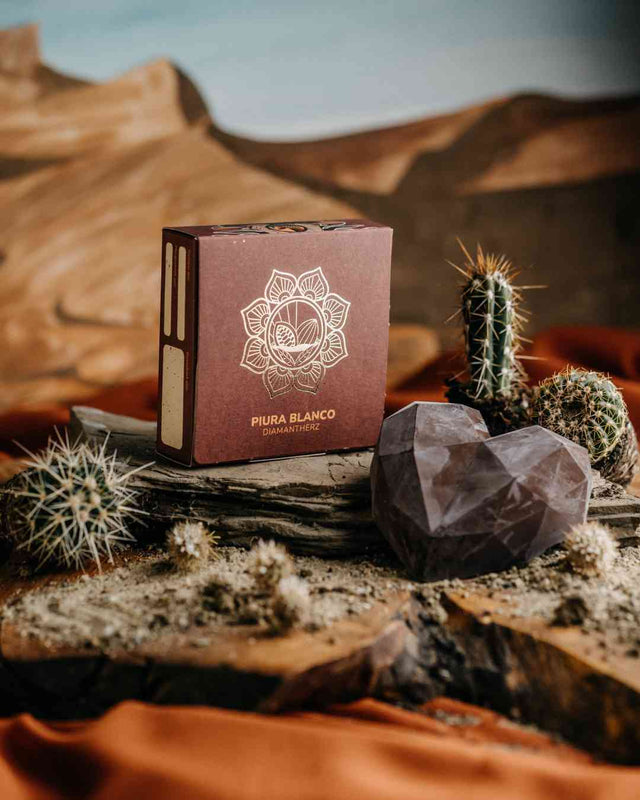
 Piura Blanco
 -
 SaleChuncho
Kakao Mischa
The Chuncho: Ceremonial cacao bars in a pack of 12
60 €102 €(166,67 € / kg)Unavailable

